
Fiction: Hotel Seaside
An Oregon costal mystery

A 10 minute read:
Lucas, venturing out west for the first time, looked forward to exploring the Oregon Coast. As a maritime history buff, he had a fascination with stories about the thousands of sailing ships that had met their fate along the wild and unpredictable Pacific.
His early morning flight from Chicago arrived on time in Portland, and after he had gathered his bags, he picked up his rental car, ready to head west - thinking he could already smell the sea air.
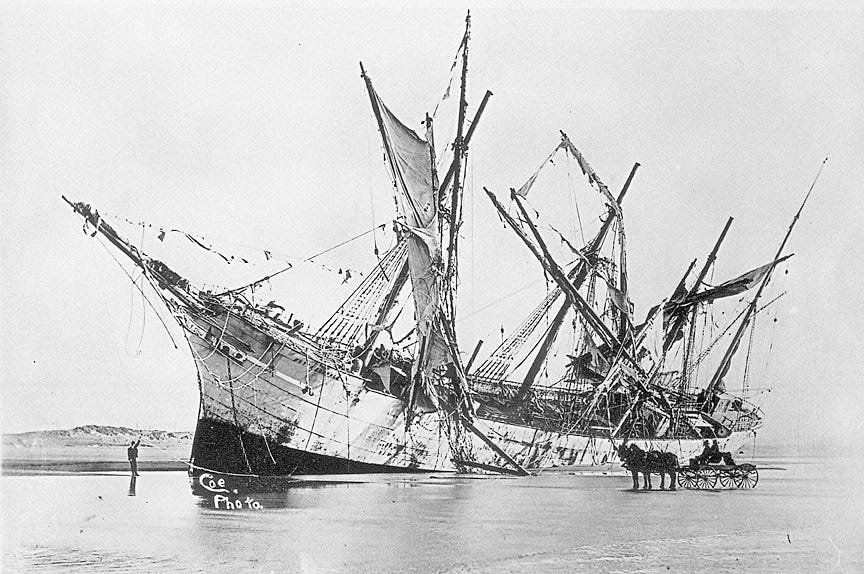
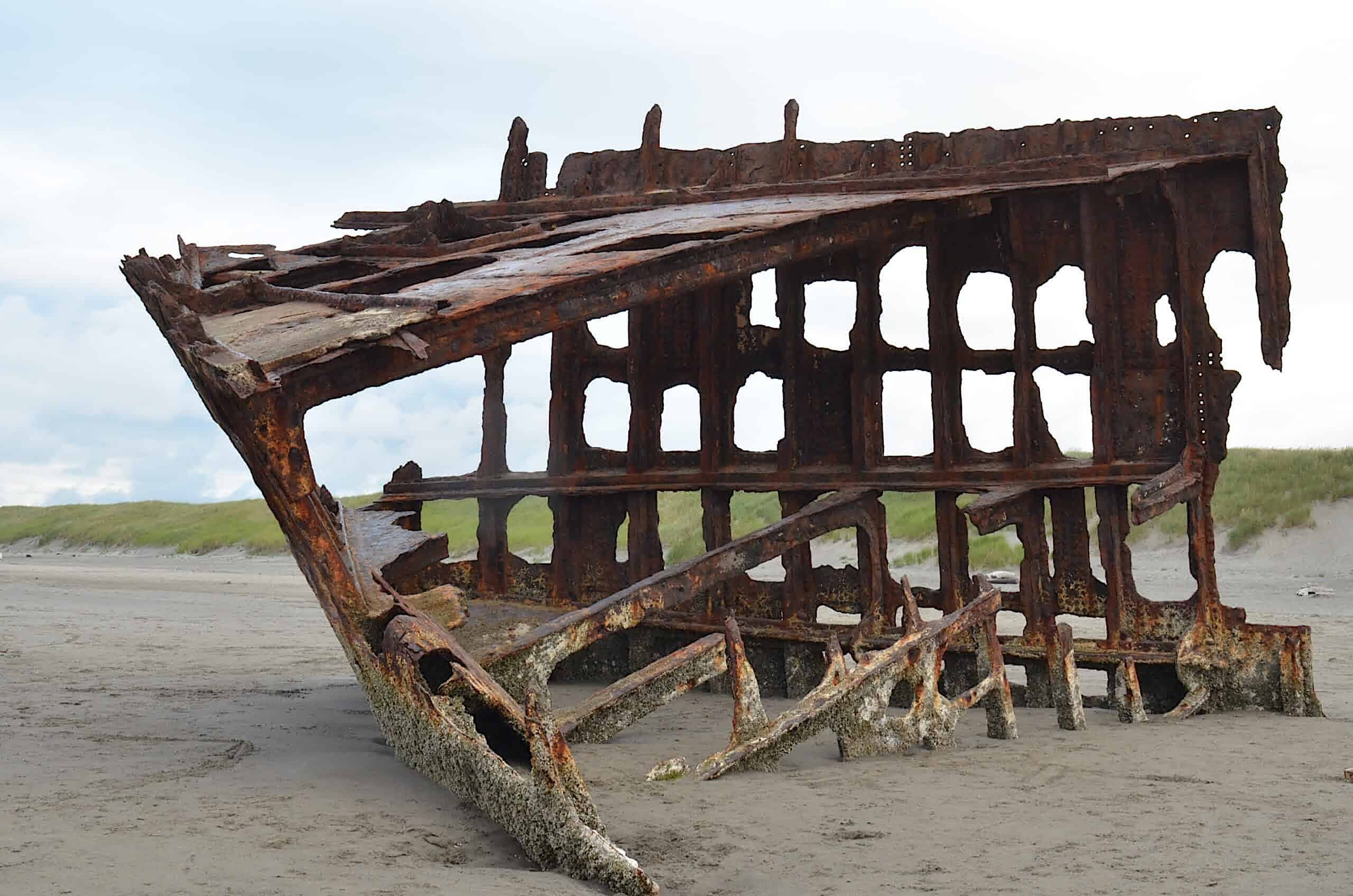
He wasn’t quite sure where to start, but he knew he wanted to see the Peter Iredale, a four-masted steel barque that ran ashore and had been abandoned on the Clatsop Spit near Fort Stevens, about four miles south of the Columbia River, in 1906. Then he would drive on down the coast to Canon Beach which had been named after a cannon that washed ashore from the shipwreck of the USS Shark in 1846. He thought it a great place to get a hotel for the night even though there might not be any real cannon to see.
The drive from Portland was about two hours, and he arrived in Warrenton shortly after noon. It was easy to find the Peter Iredale, being a classic landmark in the area. The high tide was just starting to recede, and he decided to wait until the remains of the ship sat fully free on the beach. Meanwhile, he decided to grab some lunch while he waited.
He drove a short distance to Astoria with the thought of getting a burger and fries. As he drove down the main street, he saw the Bowpicker, a small unique shop specializing in fish and chips. 'Fish and chips, of course!' he thought. Why have a burger when along the Pacific?
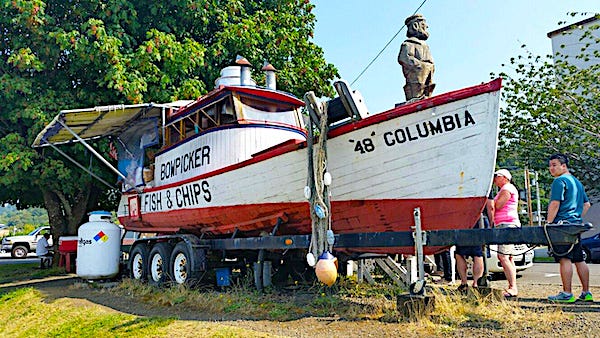
He checked out the restaurant’s online reviews. With a five-star rating and a comment by the manager stating they only sell fish and chips, he parked and went up the long walkway to the order window. He ordered Oregon-caught salmon and chips to go.
While waiting for his order, he asked about the name. It seems that a bowpicker was a type of two-person sail and oar fishing boat developed for salmon gillnet fishing on the Columbia about the same time the Peter Iredale washed ashore. Someone would stand in the bow and pick up and bring aboard the net with its catch of fish. 'What an interesting coincidence,' he thought, to start his day aboard a classic boat turned restaurant.
Given that the Columbia River Maritime Museum was only a two-minute walk from the Bowpicker, he headed there to eat his lunch. He knew he didn’t have much time until the Peter Iredale, with the tide receding, would be sitting fully exposed on the beach. But he decided to take a quick look around the museum and then perhaps stop by on the way back.
He was fascinated by the interactive exhibit map at the Museum’s entryway that told the story of over 200 large ships that had met their fate crossing the Columbia River bar and the 700 people who had lost their lives.
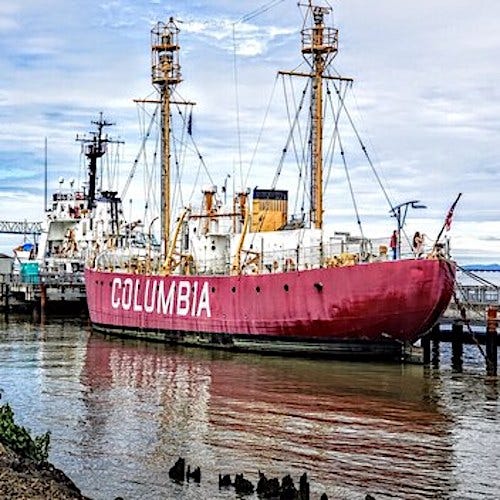
Just outside the museum, situated on the shore of the Columbia River, was the Lightship Columbia, a National Historic Landmark that once guided ships to safety at the river’s mouth. He would have liked to explore more, but drove back to the Peter Iredale. The tide had receded to where he could almost walk all around the shipwreck.
The Peter Iredale had been abandoned at sea during a storm and drifted ashore, where it became permanently stuck in the sand. What remains is a skeleton of the original ship. Over the years, it has been slowly rusting, creating an irresistible silhouette against the sky captured by photographers and indeed, Lucas took numerous photos from different angles.
It was getting late, but Lucas decided he sill had time to stroll along the ocean, something one can do the full length of the Oregon coast given that the beaches are free with no commercial development allowed.
The more he walked south the more free he felt of his daily life in Chicago. The sea air filled his lungs and it seemed his curiosity kept him walking and at one point he even took off his shoe and let the chilly ocean wash over his feet.
He was throughly enjoying his first visit to the Pacfic and wasn’t that aware of a light misty fog beginning to come in off the sea. When he did notice it, he decided to turn around and head back to the ship and his car.
He didn’t realize how far he had walked and it seemed to be taking forever. The fog grew more dense and by now the daylight was beginning to fade. He picked up his pace, but soon became disoriented in the thick fog and darkness. There were no lights along the shore line.
He reached for his phone to check out his location, then realized he had left it in the car. A bit of panic set it, but he thought if he kept the sound of the ocean on his left side, that he’d be headed north to the Peter Iredale. He continued to walk with trudging through the sand beginning to tire him. He began to think that he may have walked by the ship wreck and just didn’t see it.
He stopped to take a breath, calm himself, and perhaps find any visual reference in the thick fog and darkness of night. When he looked to his right, he thought he could see two lights in the distance. He headed inland.
As he got closer he realized there were two bright lights next to a short set of stairs leading up from the beach to moderately sized cape-cod style building. As he walked past a “Welcome to Hotel Seaside” sign, he felt relief.
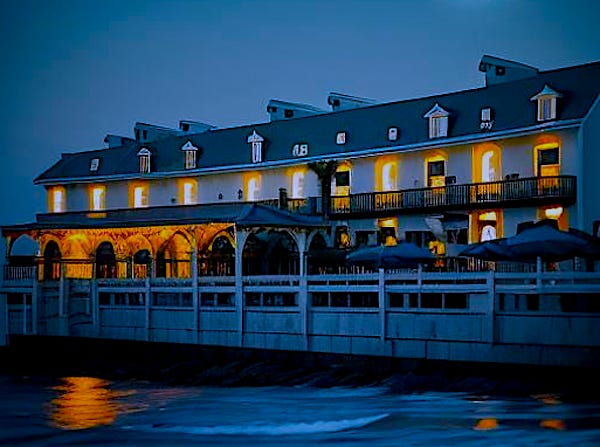
He entered the lobby and found it a welcoming place with a large stone fireplace surrounded with Adirondack chairs. Other furniture included wooden or wicker pieces upholstered in nautical stripes which reflected the maritime-themed accents like anchors, ship wheels, or framed vintage photographs of ships and coastal scenes on the walls. Wooden ceiling beams added a rustic touch. He felt warm and secure.
A dark wood reception desk stood near the entrance. 'Welcome, sir! How may I help you?' a young staff member dressed in seaside attire asked." Lucas explained his situation and wanted to return to his car, wherever it was. He was told that the hotel shuttle driver had left for the day and that the weather forecast discouraged driving the crooked coast highway because of the difficulty to see in the thick fog and dark. The receptionist suggested he stay overnight. Lucas, feeling exhausted, agreed.
His room had a definite nautical theme with more maps and charts mounted in weathered frames. There were three paintings of sailboats, lighthouses, and a quaint Oregon coastal village. And some of the shelves displayed found objects such as seashells, glass fishing net floats, and driftwood. He considered himself fortunate to have stumbled upon such a place to spend the night.
Having noticed a few people in the lobby playing a card game when he entered he decided to join them and perhaps learn a bit more about the Oregon coast. Despite his initial unease in meeting strangers, It wasn’t long before he had been welcomed warmly by the other guests.
He found his evening companions a bit strange in their attire. Unlike those you would find in a hotel lobby today, the men were wearing suits or slacks and women dresses. He had not been to the west coast, or specifically the Pacific Northwest, and he thought this was perhaps a common way to dress for an evening at a beach side retreat
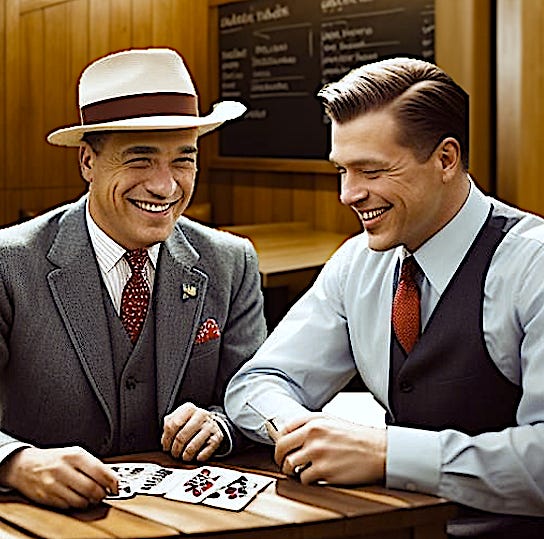
That evening, Lucas engaged in lively conversations with the eclectic mix of characters. He was asked the usual questions about what brought him to the Oregon coast and what growing up in Chicago was like. Then there were the odd questions, such as: "What do you think about the latest news on the war effort? It's hard to keep up with everything that's happening."
"Do you follow any particular radio broadcasts?: I'm always looking for new programs to listen to during the evenings. I’m not sure I like that new swing music.”
"Do you believe in the rumors about spies lurking around Portland? It's quite the topic of conversation lately."
He thought the questions were a bit odd, but the guests were older than he, and perhaps they were dwelling on times past.
The conversation turned to wreaked sailing ships and the Peter Iredale in particular. Samuel, one of the older gentlemen in the group said that he remembered when the ship was washed ashore. He and his friends would climb aboard and play. While he couldn’t remember when the dismantling of the ship actually began, he recalled how the wreck was gradually broken apart and salvaged for scrap metal by locals and salvage companies. Lucas thought the story interesting, but it was over 100 years ago the incident took place. Perhaps Samuel was recalling a false memory.
Brian chimed in and said he recalled the grounding of the “Great Republic” which was a massive clipper ship that met a dramatic end when it ran aground on the Oregon coast in heavy fog. He noted that it was one of the largest wooden ships ever built and known for its sleek design, speed, and could carry a large cargo load.
Lucas asked when and where it had gone aground. The remains had been close to the Peter Iredale becoming a popular attraction for tourists and locals alike. Brian noted that the ship eventually disintegrated and washed out to the sea om 1876 in a winter storm.
Lucas enjoyed the shipwreck stories, though he found it confusing at times as it seemed many were told as if they had had first hand experience. Perhaps the story tellers where just very imaginative and had been creating the tales for telling that evening.
Exhausted, he decided to turn in for the night. As he headed for his room, the night receptionist handed him a menu for breakfast the next day. He put it in his pocket and returned to his room enthralled by all the tales he had heard.
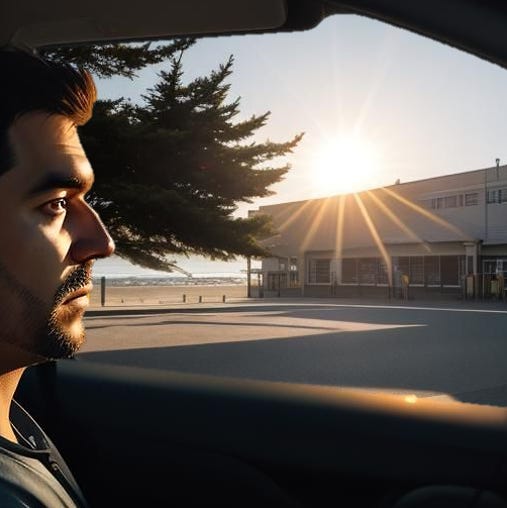
Come morning he could feel the sunlight shinning on him. He yawned and slowly opened his eyes. He was startled and sat up and looked around. He was in the front seat of his car overlooking the ocean. He was totally confused and even more so when he looked down at his dashboard to see that he had left his headlights on when he had come back from lunch in Astoria.
Did he find his way back to the car while lost in the fog and then, exhausted, imagine the hotel and its guests? That must have been what happened, he thought.
He was concerned if his car would start, given his lights had been on all night. He reached into his pocket for the key and found the Hotel Seaside breakfast menu. He opened it to take a look. It read, 'Good Morning! Breakfast this morning, June 6, 1939, begins at 8 am in the lobby.' The menu was dated almost 70 years before he was born!
He sat for a moment thinking about his experience. He then inserted the key and the engine started. He had to find the hotel and see how he got back to his car. He stopped along the way to ask if store clerks, or gas station attendants if they knew of the hotel. The answer was no, never heard of it.
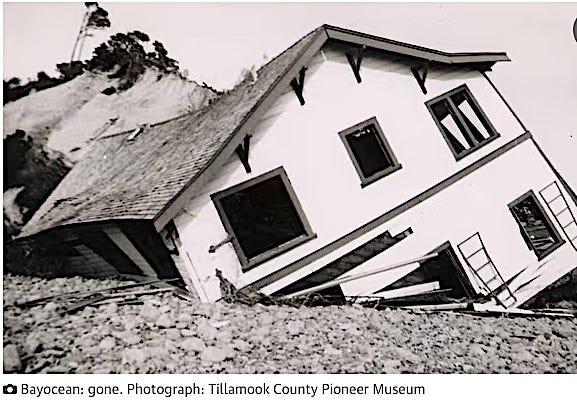
Finally, at the Astoria Tourist office, he was told that it may have been a part of an attempt in 1906, to construct what was hoped would become “The Atlantic City of the West”. A whole town was built on a sand dune spit between the Pacific Ocean and Tillamook Bay. The ocean quickly took its toll and the town of Bayocean disappeared, lost to the relentless sea. The Tourist host couldn’t find any record of a Hotel Sea Side in Bayocean, but records of the city had been destroyed in a final Pacific storm that took most everything out to sea. Plus, the location would have been 70 miles south of the Peter Iredale if had had existed.
Lucas felt overwhelmed by his first day’s experience on the Oregon coast. He could only imagine what lay ahead. He headed out of town to discover what he may in Cannon Beach.

Another wonderful piece. An enjoyable read and a little local history for us Oregonians. Thank you for this. I hope all is well. Take care.
Fun read!